


How do tailored biphasic solvent systems enable systematic chiral separations in CPC?
Isomerism refers to a phenomenon where two or more compounds have the same molecular formula, but they differ in connectivity (constitutional isomerism) or spatial arrangement (stereoisomerism) of atoms which they consist of, what may result in different physical, chemical or biological properties.
In recent decades, chromatographic techniques have advanced significantly, driven by regulatory guidelines in fields such as pharmaceuticals, materials science, agrochemicals, biotechnology, food, and environmental testing.
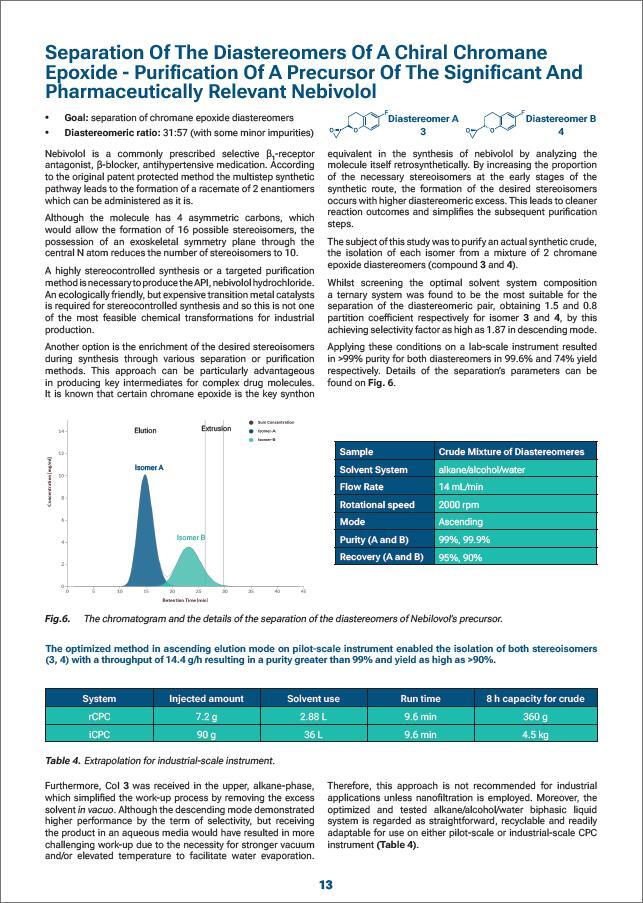
The shift towards using single isomers instead of mixtures has highlighted the challenge of isomer separation, both in chemical analysis and industrial production. Traditional methods like crystallization and distillation often fail when isomers have similar physical properties.
Compounds with multiple structural or stereoisomers further complicate separation, but differences in partition coefficients or solubility offer advantages for liquid-liquid chromatography.
Centrifugal partition chromatography (CPC) is a major advancement in offering effective isomer separation, with superior efficiency, scalable chiral separation, preparative chiral separation, preparative isomer separation and environmental benefits. As technology evolves and industries realize its potential, CPC is poised to become essential in fields ranging from pharmaceuticals to environmental science.
Benefits of CPC
Cost-Effective Chiral Separation Without Specialized Columns
CPC significantly reduces operational costs. Unlike HPLC and SFC, separation selectivity is achieved through solvent system optimization rather than using expensive chiral columns.
Broad Solvent Compatibility, Including Highly Polar Compounds
Unlike SFC, which is limited by the low polarity of supercritical CO₂, CPC supports a wide range of solvent systems, including highly polar and aqueous phases. This allows efficient chiral separation without solubility constraints.
Chiral drug development and enantiomeric purification
Designed for the efficient separation and isolation of enantiomers during pharmaceutical research, development, and production.
Sensitive or strongly interacting molecules
Eliminates irreversible adsorption and degradation risks associated with solid supports, ensuring high recovery and product integrity.
Highly polar and poorly soluble compounds
Enables chiral separation where HPLC or SFC face limitations due to solubility or stationary-phase constraints.
Scale-up from method development to continuous manufacturing
Suitable for seamless transitions from laboratory-scale feasibility studies to pilot and industrial-scale continuous CPC operation.
Download the free brochure
What do you find in this application note?
-
Fundamentals of isomerism and industrial separation challenges
-
Comparison of chiral separation technologies and their limitations
-
How CPC enables scalable, cost-effective isomer purification
-
Real-world case studies across pharma, flavors, and specialty chemicals
-
Strategies for transitioning isomer separation from lab to industrial scale

Q&A
Q: How can I separate isomers that have very similar physical properties?
A: CPC provides an effective solution by separating compounds based on partition behavior rather than relying on small physical differences.
Q: Why is isomer separation so difficult with traditional methods?
A: Many isomers have nearly identical boiling points or polarity, making techniques like crystallization or distillation ineffective.
Q: How can I improve separation of chiral compounds?
A: CPC enables efficient chiral separation without the need for expensive chiral columns.
Q: What is the best method for preparative isomer separation?
A: CPC is highly effective for preparative-scale isomer separation due to its scalability and high recovery.
Q: How can I reduce costs in chiral or isomer separation?
A: CPC eliminates the need for costly columns and reduces solvent and consumable expenses.
Book a meeting
About RotaChrom
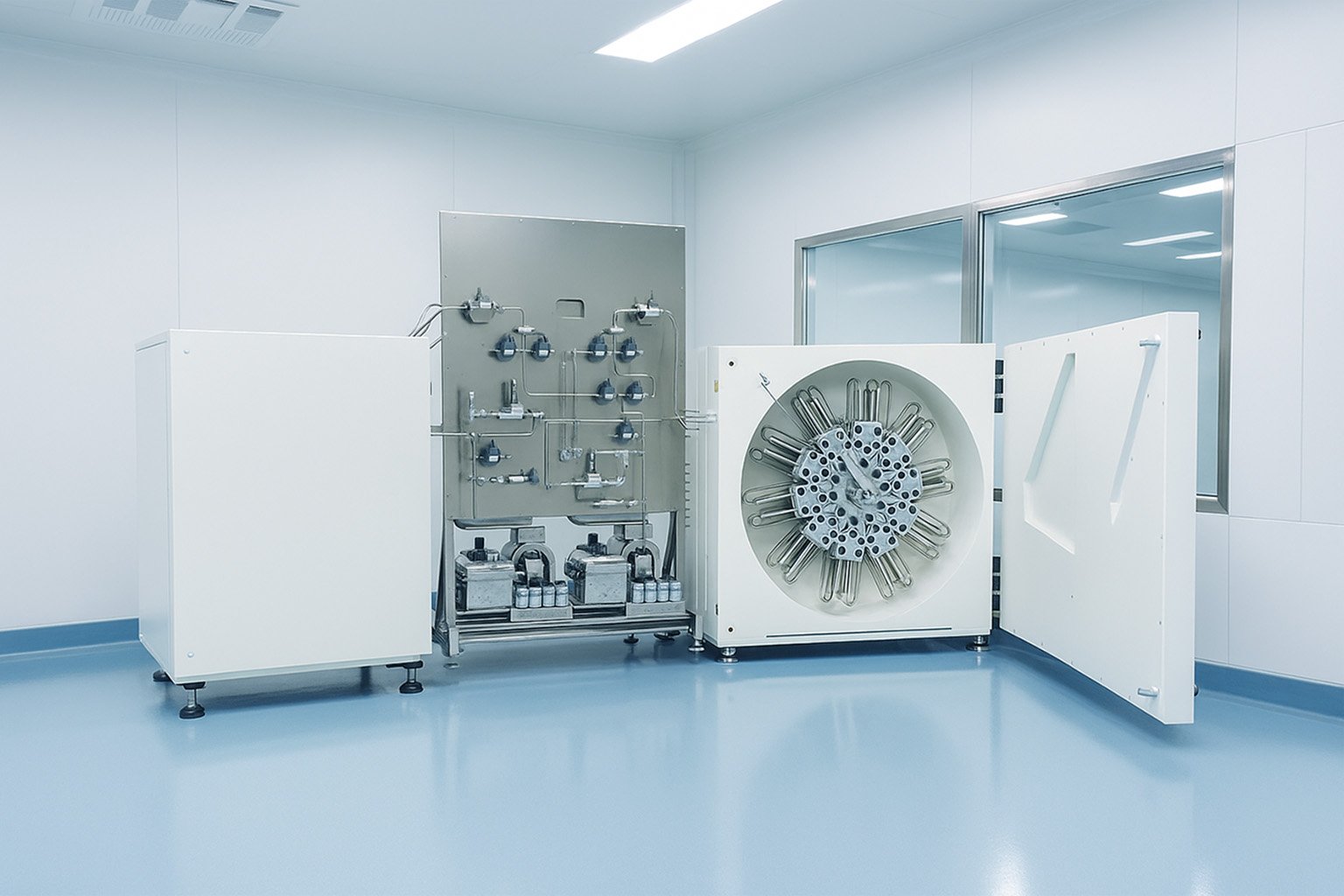
RotaChrom Technologies develops and manufactures industrial-scale centrifugal partition chromatography (CPC) technology platforms. Founded in 2014, RotaChrom distributes its CPC devices around the world. With the help of their industry-leading chemists and engineers, their instruments revolutionized purification by providing cost-effective industrial-scale chromatography solutions to customers in various industries, including pharmaceutical, biotechnology, chemistry, nutraceutical, and botanical extracts.