---
title: Sustainability in liquid–liquid chromatography and CPC
description: Sustainability in liquid–liquid chromatography and CPC
---
[](https://rotachrom.com/)
[](https://rotachrom.com/)
- [Applications](https://rotachrom.com/applications-pharma-and-biotech/)
- [Technology](https://rotachrom.com/technology-scientific-value/)
- [Products](https://rotachrom.com/products)
- [Services](https://rotachrom.com/services-solution_planning_experimental_design/)
- [Calculators](https://rotachrom.com/cpc-simulator/)
- [Source](https://rotachrom.com/brochures-white-papers/)
- [Company](https://rotachrom.com/company-about-us/)
- [Contact](https://rotachrom.com/contact/)
- [Applications](https://rotachrom.com/applications-pharma-and-biotech/)
- [Technology](https://rotachrom.com/technology-scientific-value/)
- [Products](https://rotachrom.com/products)
- [Services](https://rotachrom.com/services-solution_planning_experimental_design/)
- [Calculators](https://rotachrom.com/cpc-simulator/)
- [Source](https://rotachrom.com/brochures-white-papers/)
- [Company](https://rotachrom.com/company-about-us/)
- [Contact](https://rotachrom.com/contact/)
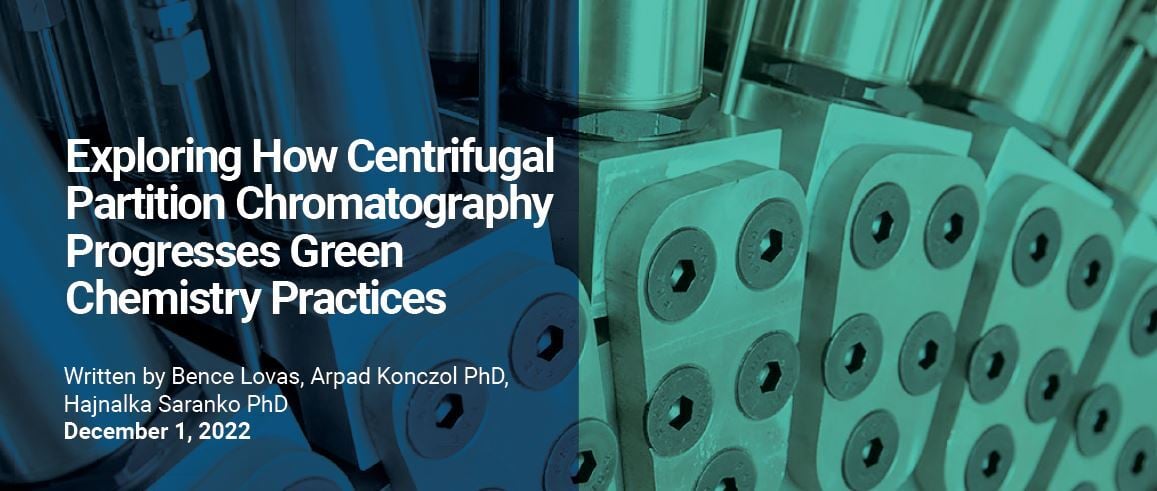
## Can chromatography be both industrially scalable and truly sustainable?
Traditional preparative-scale chromatography remains one of the most resource-intensive steps in downstream processing, driven by high solvent consumption, solid waste generation, and limited recyclability. As regulatory and economic pressure increases, sustainability is no longer a secondary consideration but a core requirement for modern chemical and pharmaceutical manufacturing.
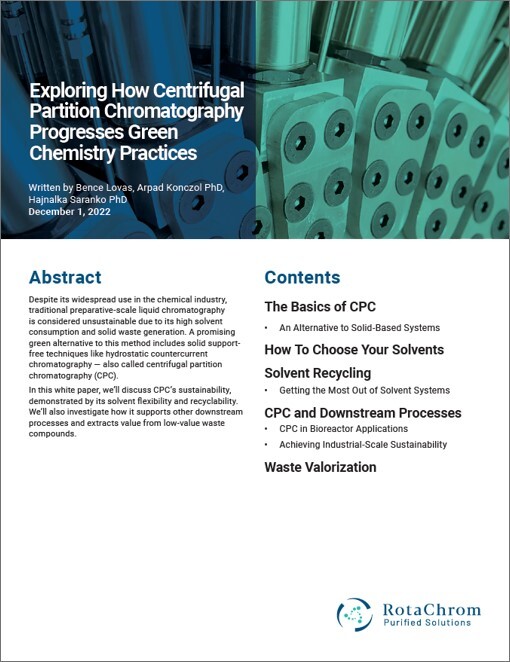
This white paper explores Centrifugal Partition Chromatography (CPC) as a solid-support-free alternative that aligns chromatographic performance with green chemistry principles. By eliminating silica-based stationary phases and enabling flexible, recyclable solvent systems, CPC offers a pathway toward lower environmental impact without compromising purity, yield, or throughput.
Beyond separation itself, the paper examines how CPC integrates into broader downstream workflows—from solvent recycling and bioreactor coupling to waste valorization—demonstrating how sustainable chromatography can actively improve process efficiency, reduce costs, and unlock value from low-grade or waste streams.
## Download the free brochure
## What do you find in this white paper?
- Why conventional preparative chromatography is environmentally unsustainable
- CPC as a green alternative to solid-based separation techniques
- Strategies for solvent selection, recycling, and circular solvent use
- Integration of CPC into downstream processes and bioreactor systems
- Waste valorization examples enabled by CPC-based purification
[](https://hub.rotachrom.com/hs/cta/wi/redirect?encryptedPayload=AVxigLJroriIZqkLyWlqx58wMnnf%2BbK1A7Z6whKFXC4ByVlPYD5POiQ%2FgUExTXVNMX0APLyYLjr%2B7S%2Fpuw%2FIQUDnRwkABVWaieXyxtLR5QXl7fjNpBqg3Ii4mSkM34joeUw97w0s4TE3QAoKI80FHiESUih2DW3M4MLPuBoYJFNBmZi0E9ivlPoo%2BZW3hgzIykWFTi9iKE6ZKrztR0O3%2BfGCEL7fqr2Zi%2B5uw5ciKZRTqIRH1BvbP2TOhCPYVpZ5oxn0kA%3D%3D&webInteractiveContentId=206866655097&portalId=5763758&hsLang=en)
# Book a meeting
---
# About RotaChrom
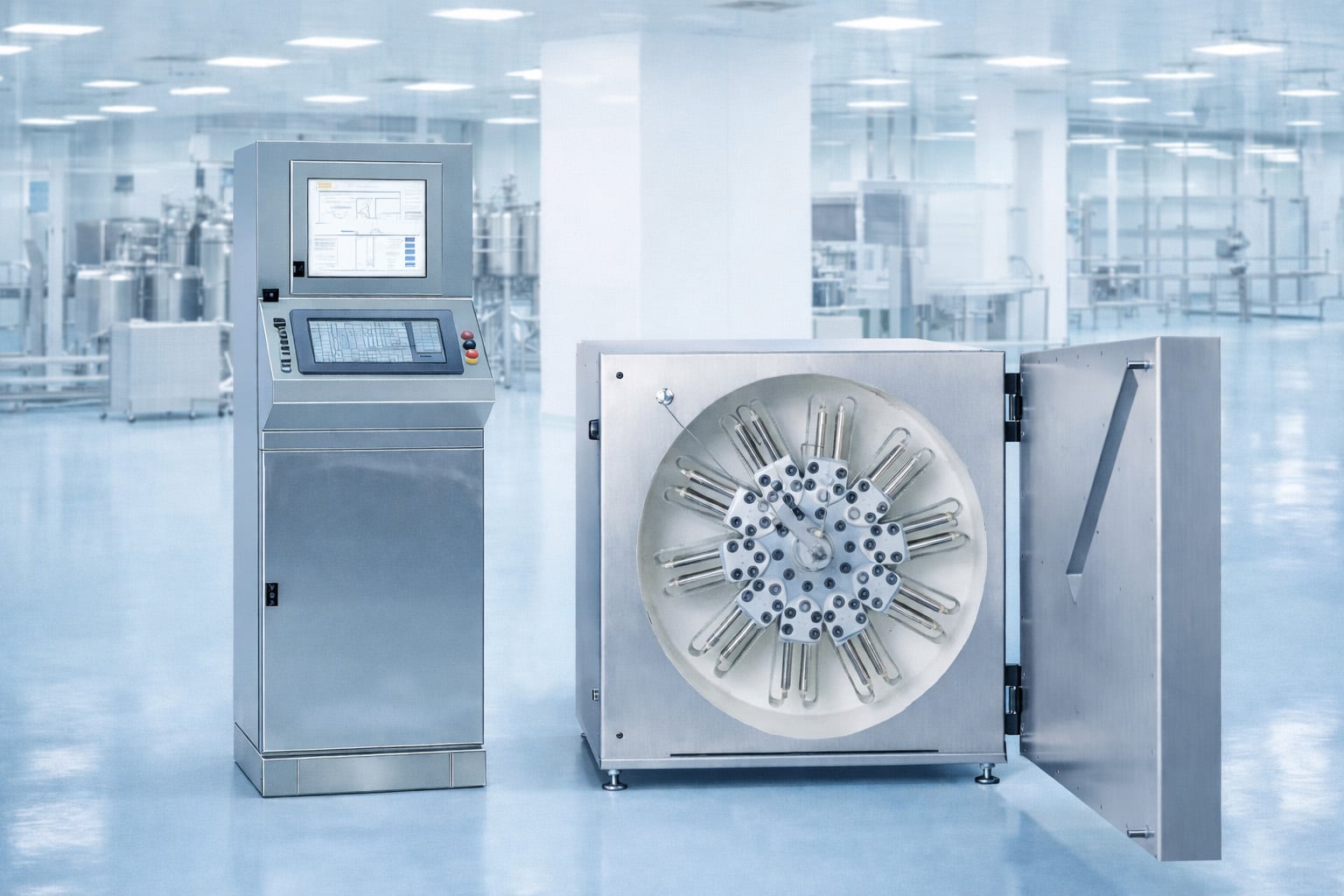
[RotaChrom](https://rotachrom.com/) Technologies develops and manufactures industrial-scale centrifugal partition chromatography (CPC) technology platforms. Founded in 2014, RotaChrom distributes its CPC devices around the world. With the help of their industry-leading chemists and engineers, their instruments revolutionized purification by providing cost-effective industrial-scale chromatography solutions to customers in various industries, including pharmaceutical, biotechnology, chemistry, nutraceutical, and botanical extracts.
##### Latest Publication
[Daniela Hermosilha, Guilherme Trigo, Mariana Coelho, Inês Lehmann, Matteo Melosini, Ana Paula Serro, Catarina Pinto Reis, Maria Manuela Gaspar, Susana Santos, 2025](https://www.mdpi.com/1999-4923/17/10/1291), [‘Valorization of Thyme Combined with Phytocannabinoids as Anti-Inflammatory Agents for Skin Diseases’, *Pharmaceutics*, Article](https://doi.org/10.3390/pharmaceutics17101291)
##### Webinars
### [CPC Simulator: A Digital Tool for Smarter Purification workflows](http://rotachrom.com/webinars/)
### Dec 4, 2024
### [Maximize Your CPC Investment With Our Free TCO Calculator](http://rotachrom.com/webinars/) Oct 22, 2024
[Pesticides Remediation](https://rotachrom.com/pesticides-remediation/)
April 17, 2021
##### Career
As a RotaChrom employee, you will have the opportunity to participate in the creation of the frames and fundamentals of the company’s working processes.
**I'M INTERESTED**
##### Contact Us
### RotaChrom Technologies PLC (Headquarters)
Csillag street 2/A, Kecskemet, HU-6000
+36 70 885 5117
[GET IN TOUCH](https://rotachrom.com/contact)
[Cookie Policy](https://rotachrom.com/cookie-policy/) / [Data Protection Policy](https://rotachrom.com/cookie-policy/) / RotaChrom® is a registered trademark of RotaChrom Technologies in the USA and EU. All rights reserved. / © 2023 RotaChrom Technologies. All rights reserved.